introduction
For years, the 125cc category was seen as a “stepping stone”—a collection of budget-friendly, often uninspiring machines designed to get you from point A to point B while you dreamed of something bigger. Then came the Honda CB125R.
Part of Honda’s “Neo Sports Café” family, this bike didn’t just break the mold; it shattered it. By combining “big-bike” aesthetics with premium components usually reserved for 600cc+ machines, the CB125R has become the gold standard for learners and urban commuters alike. Whether you are a fresh rider with a brand-new A1 license or a seasoned veteran looking for a stylish city runabout, here is everything you need to know about the latest 2026 model.
1. First Impressions: Aesthetics and “Big Bike” Presence
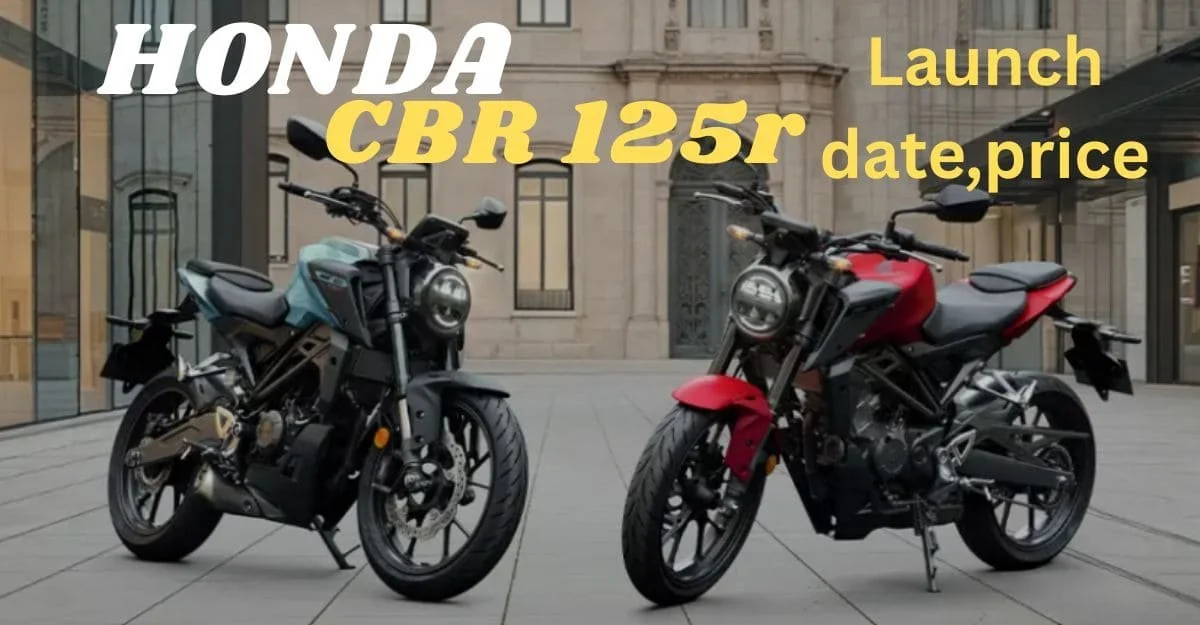
The most striking thing about the Honda CB125R is that it doesn’t look like a 125. Park it next to its sibling, the CB300R, or even a CB650R, and you’ll notice they share the same DNA: a minimalist, industrial design that blends retro-round headlights with sharp, modern lines.
- Signature Styling: The circular LED headlight with its “dual-bar” signature is an instant eye-catcher.
- New for 2026: Honda has refreshed the palette with stunning new options, including Mat Rock Gray, Mat Lucent Silver Metallic, and the vibrant Zefiro Blue Metallic.
- Mass Centralization: With an underslung exhaust and a compact tail, the bike looks incredibly dense and aggressive, hiding its lightweight nature perfectly.
2. The Heart of the Beast: Engine and Performance
Under the sculpted fuel tank sits a 125cc, DOHC, 4-valve, liquid-cooled single-cylinder engine. While 125cc bikes are legally capped at 11kW (approx. 15hp), not all 15hp engines are created equal.
Key Performance Specs:
To optimize this for Indian readers, we need to translate these numbers into context that matters in our local market—comparing them to popular 125cc-200cc bikes like the KTM Duke 125 or TVS Raider 125.
Here is the “proper” rewrite designed for high engagement and readability:
Performance: The “Small Engine, Big Heart” Specs
In the Indian market, we usually equate 125cc with “mileage over power.” But the 2026 Honda CB125R flips the script. It is built to compete with the likes of the KTM Duke 125, delivering performance that punches way above its weight.
Power and Torque Breakdown
- Max Power: $11.0\text{ kW}$ ($15\text{ hp}$) @ $10,000\text{ rpm}$Local Context: This is right at the legal limit for A1 licenses in Europe and significantly more powerful than a standard Indian commuter (like the Shine 125 at $10.7\text{ hp}$).
- Max Torque: $11.6\text{ Nm}$ @ $8,000\text{ rpm}$The Feel: Because it’s a high-revving DOHC engine, the power delivery is smooth and rewarding. It doesn’t feel “stressed” when you push it toward the redline.
Speed and Efficiency
- Top Speed: $110\text{–}120\text{ km/h}$While most 125s struggle past $95\text{ km/h}$, the CB125R can comfortably cruise at highway speeds, thanks to its aerodynamic Neo Sports Café design and 6-speed gearbox.
- Fuel Economy (Mileage): $45.5\text{ km/L}$The Math: On a full $10.1\text{L}$ tank, you can expect a massive range of over $460\text{ km}$. Whether it’s city traffic or a weekend ride to the hills, you won’t be looking for a petrol pump every two days.
The 2026 model is fully Euro5+ compliant, ensuring it meets the strictest emission standards without sacrificing that “peppy” feel. The 6-speed gearbox is typical Honda—slick, precise, and incredibly easy to navigate, even for beginners who are still mastering their clutch control.
3. High-End Hardware: Suspension and Braking
This is where the CB125R earns its “Premium” badge. Most bikes in this class use budget telescopic forks. Honda, however, equipped the CB125R with 41mm Showa Separate Function Big Piston (SFF-BP) USD forks.
Why this matters: These are the same types of forks found on much larger sportbikes. They provide exceptional front-end feedback and stability, making the bike feel planted through corners and composed over city potholes.
Safety First: IMU-Controlled ABS
Braking is handled by a $296\text{ mm}$ floating front disc and a radial-mount, four-piston Nissin caliper. But the real “secret sauce” is the Inertial Measurement Unit (IMU).
- The IMU monitors the bike’s behavior and manages the ABS intervention to prevent the rear wheel from lifting during hard braking.
- For a beginner, this level of safety tech is a massive confidence booster.
4. Technology and Ergonomics
The cockpit of the 2026 CB125R feels like a high-tech command center.
- 5-inch Full-Color TFT Display: Inherited from the CB1000R, this screen is crystal clear even in direct sunlight. It offers multiple display modes for the tachometer and speedometer.
- Premium Switchgear: The buttons feel tactile and robust, far removed from the “plasticky” feel of entry-level commuters.
- Riding Position: With a seat height of $816\text{ mm}$, it’s accessible for most, though shorter riders might find themselves on their toes. The “fat-bar” style handlebars provide an upright, commanding view of the road, perfect for filtering through morning traffic.
5. Pros and Cons: A Fair Assessment
| Feature | The Good | The Bad |
| Build Quality | Top-tier Honda reliability and finish. | Premium price tag compared to budget 125s. |
| Handling | Extremely agile; weighs only 130kg (wet). | No wind protection for long highway hauls. |
| Technology | IMU-based ABS and 5″ TFT are class-leading. | The seat is a bit firm for multi-hour tours. |
| Economy | Low running costs and high MPG. | Performance is capped by A1 regulations. |
6. Who is the Honda CB125R for?
If you want the cheapest 125cc bike to deliver pizzas, this isn’t it. However, if you are:
- A New Rider: Who wants a safe, high-quality machine that won’t “feel” like a learner bike after three months.
- A City Professional: Looking for a stylish, fuel-efficient way to beat the commute.
- A Gearhead: Who appreciates mechanical beauty and “big bike” components.
7. Launch date of Honda cb125r
As of early 2026, Honda has not officially announced a launch date for the CB125R in India, and industry reports suggest an Indian release is highly unlikely in the near future.
While the bike is a favorite in European markets and recently received a refresh with new colors for the 2026 model year, several factors are keeping it off Indian shores:
Why It’s Not Launching Yet
- Pricing Challenges: The CB125R features high-end components like Showa SFF-BP USD forks, a 5-inch TFT display, and an IMU-controlled ABS system. These “big bike” features would drive the price up to roughly ₹1.80 – ₹2.20 Lakh, making it more expensive than most 250cc or even 400cc bikes currently sold in India.
- Market Positioning: In India, the 125cc segment is primarily viewed as a budget-conscious commuter class. Honda currently dominates this space with the Shine 125 and the SP 125. Introducing a premium 125cc at a luxury price point is a risky move that Honda has historically avoided.
- Competition: The only “premium” 125cc in India is the KTM Duke 125, which struggles to justify its high price tag compared to the more powerful Pulsar or Apache 200cc models.
Also read: The Screaming Legend: Why the Honda CBR 600RR Still Rules the Streets
Final Verdict
The Honda CB125R is more than just a 125cc motorcycle; it’s a statement. It proves that small-capacity bikes can be sophisticated, high-performing, and undeniably cool. While it carries a premium price, the combination of Showa suspension, Nissin brakes with IMU control, and that gorgeous Neo Sports Café styling makes it worth every penny. It doesn’t just teach you how to ride; it makes you fall in love with riding.